AI Is A Team Sport
American Institute for Professional Training & Development
October 2026
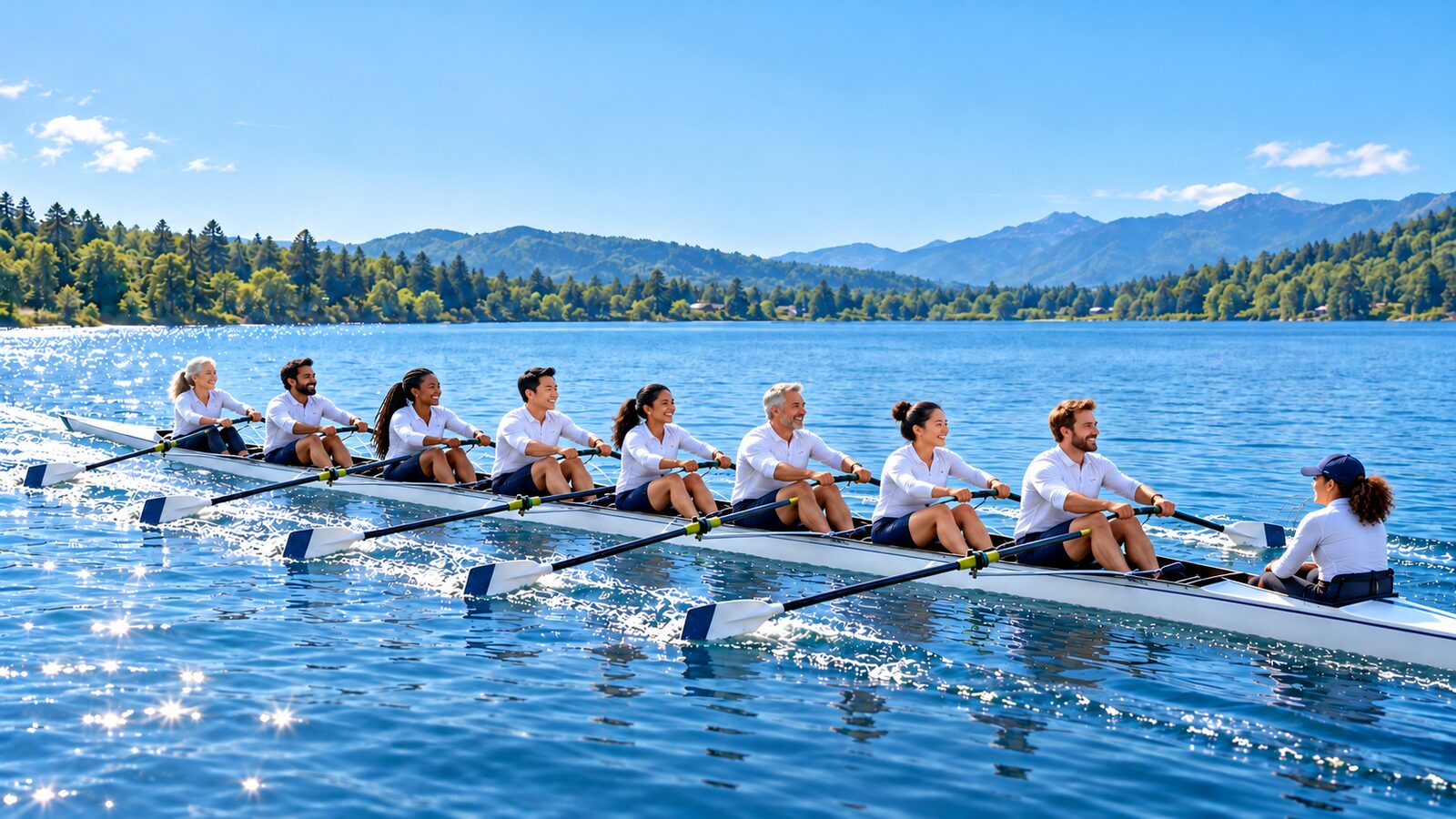
Why organizations get more from AI when their people learn it together
Walk into almost any organization today and you will find the same scene. One person down the hall has quietly figured out how to get real work out of an AI tool. They draft reports in half the time, summarize long documents before the meeting starts, and turn messy notes into clean action lists. A few colleagues have tried it once or twice and given up. Others are curious but unsure what is allowed. And a handful have decided, without saying so out loud, that they want nothing to do with it.
Leadership looks at this picture and sees progress. Somebody is using AI, after all. But what they are really looking at is a team where one player has learned a new set of plays and nobody else knows them. That is not an advantage. It is a bottleneck waiting to happen.
The Star Player Problem
When AI adoption depends on a few self-taught enthusiasts, the gains stay locked inside those individuals. Their prompts live in their personal accounts. Their judgment about what to trust and what to double-check lives in their heads. When they go on vacation, change roles, or leave the organization, the capability walks out the door with them.
Worse, uneven adoption creates uneven quality. One person checks every AI-generated figure against the source document. Another pastes output straight into a client email. One person knows never to upload confidential information into a public tool. Another has never been told. The organization ends up with no shared standard, no shared vocabulary, and no shared sense of where the boundaries are. That is how small mistakes turn into expensive ones.
A team where one person knows the plays is not a team with an advantage. It is a team with a single point of failure.
What Teams Get That Individuals Do Not
Great teams win because everyone understands the game plan, speaks the same language, and trusts each other to do their part. AI works the same way. When a team learns together, four things happen that never happen when people learn alone.
First, the team builds a common language. Everyone knows what a well-structured prompt looks like, what context the tool needs, and how to describe the output they want. A manager can say "run that through the summary prompt we built" and everyone knows exactly what that means.
Second, the team agrees on its rules of play. Together, people decide which tasks AI can handle with light review, which require careful verification, and which must stay entirely in human hands. Those decisions stop being private guesses and become shared, visible standards.
Third, the team multiplies its wins. A workflow that saves one person two hours a week saves a team of ten people twenty hours a week. Good prompts, templates, and techniques get passed around instead of reinvented at every desk.
Fourth, the team protects itself. When everyone has been trained on the same guardrails, a colleague is far more likely to catch an error, question a suspicious figure, or flag a privacy concern before it leaves the building.
The Coaching Philosophy: AI Drafts, We Decide
Every good team needs a coaching philosophy, and the one that matters most with AI is simple: AI drafts, we decide. AI is a remarkably fast and capable assistant. It can produce a first draft, organize information, surface options, and catch things a tired person might miss. What it cannot do is take responsibility. Judgment, accountability, and the final call stay with the professional.
Teaching this principle to one person is useful. Teaching it to an entire team changes the culture. When everyone shares the same understanding of where AI helps and where human judgment is required, the organization can move quickly without becoming careless. People stop treating AI as either magic or menace and start treating it as a teammate with a clearly defined position on the field.
AI drafts, we decide.
What Team Training Looks Like
Effective team training is not a lecture about technology. It is practice on the work the team actually does. Participants learn side by side, using realistic scenarios drawn from their own field, so the skills transfer the moment they return to their desks. They build prompts together, compare results, critique each other's output, and see firsthand why the same request can produce very different answers depending on how it is framed.
Along the way, the group works through the questions that matter most to the organization. Which tasks are safe to hand to AI with a quick review? Which need a second set of eyes? Which should never be delegated at all? The team leaves with answers it built together, which means answers it is far more likely to follow.
Just as important, training brings the skeptics and the enthusiasts into the same room. The enthusiasts learn discipline. The skeptics learn possibility. Both learn that the goal is not to replace their expertise but to give it more reach.
Keeping Score
Organizations that train their teams together tend to see the difference quickly. Routine writing and summarizing take less time. Quality becomes more consistent because everyone follows the same review standards. New hires get up to speed faster because there is a shared playbook to hand them. And leadership gains something it rarely has with new technology: confidence that the tool is being used well, safely, and in the same way across the organization.
Perhaps most valuable of all, the team gains momentum. Once people share a foundation, they start improving it together. They trade new techniques, refine their templates, and push into new uses. Capability stops depending on a few individuals and becomes part of how the organization works.
Everyone Plays
The organizations that will get the most from AI are not the ones with the single most talented user. They are the ones where everyone knows the game plan, trusts the rules, and plays their position well. That kind of capability is not something people stumble into on their own. It is built deliberately, together.
AI is a team sport. The organizations that train like a team will play like one.